


A fuller social life grows through small, repeatable actions, not a sudden burst of confidence. Learning how to build a social life as a woman can start with two conversations each week, regular visits to places where shared interests bring people together, and following up when you click with someone. You don't need to feel completely at ease before you begin.
Making friends as an adult can feel harder when work, changing routines, or a new life chapter leave less room for connection. That doesn't mean you have to become the most outgoing person in the room. Consistency can give friendships space to develop.
Here are practical ways to strengthen existing bonds, join conversations, welcome invitations, and build social confidence through action. Start with one manageable step and let genuine connection grow from there.
Key Takeaways
- Build stronger friendships with attentive conversations, steady support, and simple ways to stay in touch.
- Make adult friendship feel more intentional by choosing the qualities you value and creating easy check-in rituals.
- Use shared interests as natural conversation starters, then follow up to turn a friendly exchange into a connection.
- Accept invitations when you can, and keep hosting low-pressure: a small gathering can be enough to bring people closer.
- Grow social confidence through manageable actions, like starting a conversation or staying at an event long enough to settle in.
1. Maintaining friendships through support and regular interaction
Friendship grows through attention, support, and repeated contact. Put your phone away during conversations and listen without planning your reply. Ask a follow-up question about what the other person shared. If a friend mentions a difficult presentation, check in afterward and ask how it went. Remembering small details shows genuine interest and helps people feel heard.
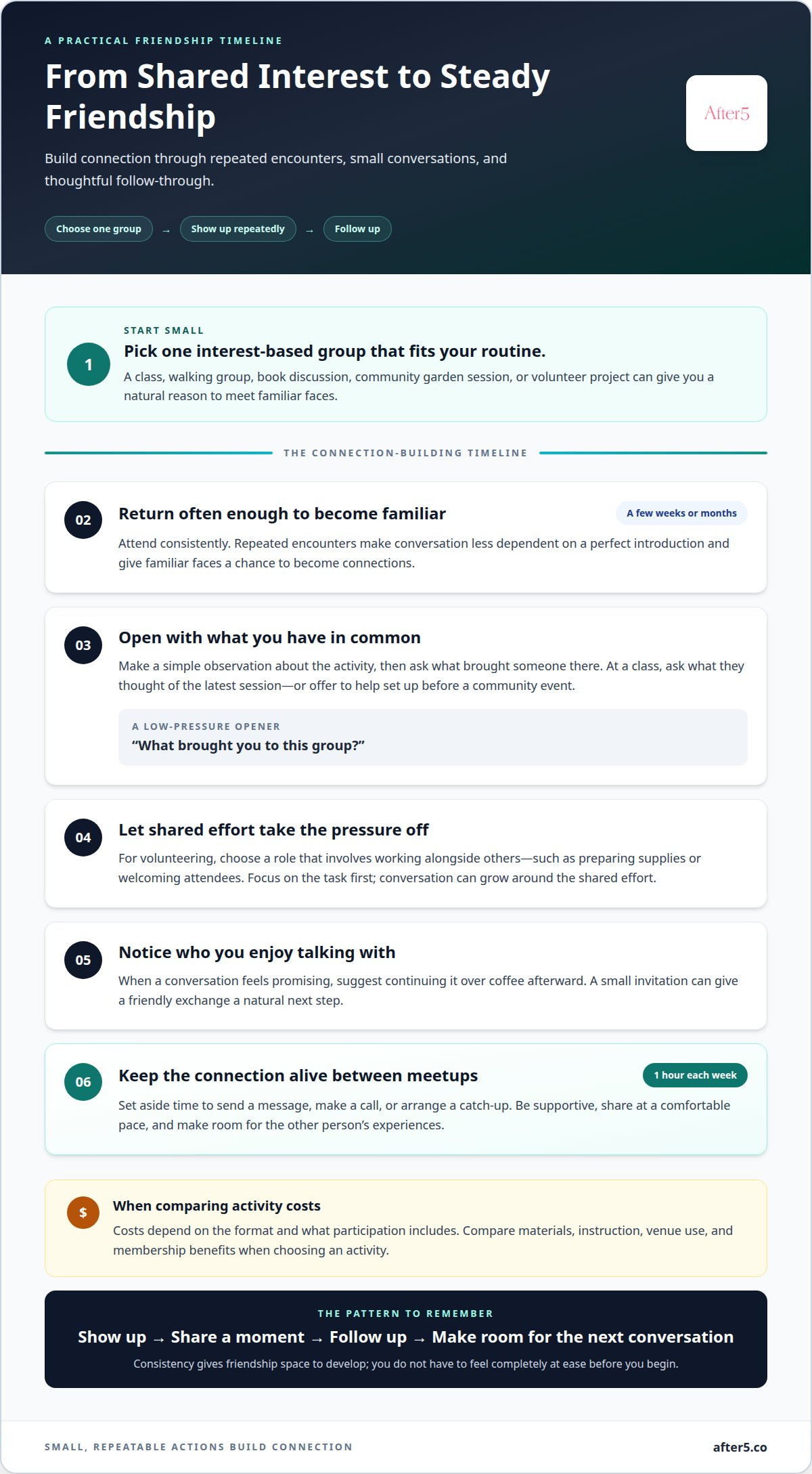
Make connection easier by choosing places where shared interests and proximity bring people together. A weekly book discussion, a monthly community garden session, or a neighborhood volunteer shift gives you a reason to see familiar faces again. Repeated encounters make conversation less dependent on a perfect introduction. You can start with a simple observation about the activity, then ask what brought someone there.
In the United States, the cost of social activities, hobby classes, and membership groups depends on the format and what participation includes. Materials, instruction, venue use, and membership benefits can all affect the cost, so compare those details when choosing an activity.
Start small. Choose one interest-based group that fits your routine, then attend consistently for a few weeks or months. A class, walking group, or volunteer project can create natural conversation without requiring you to approach everyone at once. For example, ask a classmate what they thought of the latest session, or offer to help set up before a community event. Shared tasks make introductions easier.
Volunteering can connect you with people who care about the same cause. Choose a role that involves working alongside others, such as preparing supplies or welcoming attendees. Focus on the task first; conversation can grow around shared effort. At a recurring activity, notice who you enjoy talking with and suggest continuing the conversation over coffee afterward.
Then make time for the connections you’ve started. Set aside an hour each week to send a message, make a call, or arrange a catch-up. Be supportive, share something personal at a comfortable pace, and make room for the other person’s experiences. Regular interaction matters, but so does balance: aim for friendships that feel more positive than draining. A thoughtful check-in can keep a promising connection alive between meetups.
Active listening means giving someone your attention and showing genuine interest. You can also create opportunities for friendship by attending events and engaging with people who share your interests.
2. How do I make friends as an adult?
Begin with the qualities you want in close friends. Generosity, honesty, loyalty, curiosity, and reliability offer a clearer guide than shared background alone. Think about how those qualities show up in everyday moments. Does someone follow through on plans? Do conversations feel reciprocal? Give new connections room to develop, while noticing whether you feel comfortable being yourself around them.
After moving to a new city or starting a new life stage, choose a recurring place to meet people. A class, community group, or regular gathering makes it easier to recognize familiar faces and build a network over time. Set a small goal, such as introducing yourself to one person at each visit. Repetition gives conversations a natural next step.
Keep promising friendships alive with simple rituals. Set aside one hour every week to message, call, or make plans with friends. A monthly call or a recurring brunch can turn good intentions into time together. If anxiety makes initiating feel difficult, send a specific, low-pressure message: “Would you like to get coffee after work on Thursday?” A clear invitation is easier to answer than “We should hang out.”
Birthday parties can widen your circle without requiring a formal introduction. Ask the host how they know another guest, then follow up with a question about their connection. If you enjoy talking, suggest continuing over coffee or invite them to a group plan. You can also introduce two friends who might enjoy meeting. Shared context helps everyone feel more comfortable, and group connections can grow beyond one-to-one plans.
To balance work, family, dating, and friendships, give social time a place in your calendar. Choose a rhythm that fits your responsibilities, such as a weekly outing or monthly meal. A recurring plan reduces the effort of deciding each time. Keep invitations realistic, and offer an alternative date when work or family commitments make the original plan difficult.
Follow up after meeting someone new with a note that names a detail from your conversation. “I loved hearing about your pottery class” feels personal and gives the connection somewhere to go. For anyone thinking about how to build a social life as a woman, steady follow-through can matter more than a perfect first impression. When you’d like structured support for making meaningful new connections, explore After5 Membership.
3. Talking with strangers and building community
Start with one person, not an entire room. At a class or community gathering, notice something specific and open with a simple question: “What brought you to this group?” Listen to the answer, then share a little about your own interest. A thoughtful compliment about someone’s creativity or curiosity can also begin a conversation without focusing on appearance. Keep your first goal small: introduce yourself to one new person.
Curiosity keeps a conversation moving without making it feel like an interview. Ask an open question, listen closely, and respond to something the person actually said. If someone mentions visiting a neighborhood art walk, ask what they enjoyed most. Share your own perspective, too. Authentic conversation means offering enough of yourself for someone to find a point of connection, while leaving room for both people.
When meeting someone from an online community in person, suggest a public place and arrange your own way there and home. Tell someone you trust where you’re going, and keep personal details private until trust develops. Notice how the other person responds to your boundaries. You can end a conversation or leave a gathering whenever you feel uncomfortable.
Build community by choosing a group that meets regularly, then attend often enough to recognize familiar faces. A shared interest gives people an easy reason to talk; helping organize the next gathering gives you a natural role. Offer to welcome newcomers, coordinate supplies, or help choose a discussion topic. Working together creates more opportunities for meaningful conversation than arriving and leaving without engaging.
Look for places where people are open to meeting others, such as seminars, opening nights, and cultural or charitable events. A class tied to an interest can also make conversation easier because everyone has a shared starting point. If you enjoy a recurring activity, suggest meeting before or after the next session. Joining the organizing team can deepen connections and help turn a gathering into an active community.
After a good conversation, follow up with a brief message that recalls something you discussed. You might say, “I enjoyed hearing about your neighborhood project. Are you coming to the next gathering?” A clear invitation creates a next step without pressure. Over time, repeated conversations, shared effort, and genuine curiosity can help a room of strangers feel more familiar.
4. Accepting invitations and hosting gatherings
Accepting an invitation gives a new connection room to grow beyond its first conversation. If a colleague invites you to a gallery opening, reply clearly and ask what time they plan to arrive. If you can’t make it, suggest another plan instead of leaving the invitation unanswered. A warm response keeps the exchange open and makes future plans easier to start.
Make attending feel manageable by deciding on one simple goal beforehand. You might aim to greet the host, speak with someone you haven’t met, or stay long enough to settle into a conversation. At a birthday party, ask how a guest knows the person celebrating. That shared connection gives you an easy opening, without needing a polished introduction.
Once you’re there, focus on the person in front of you. Ask a question about the gathering, listen to the answer, and share a related detail of your own. If someone mentions a recent hike, for example, ask what trail they enjoyed. Try to remember a detail, such as their favorite route, and bring it up if you meet again. These small social skills make conversation feel more personal.
Hosting can be simple. Invite a few people for brunch, coffee, or a relaxed meal at home. A small group gives everyone room to speak, while a clear plan keeps preparation light. Ask each guest to bring a dish, choose a familiar café, or set out tea and fruit. The point is shared time, not an elaborate setup.
Help guests connect by choosing an easy conversation prompt. Ask what they’ve been enjoying lately, or how they know another person in the group. If someone seems quiet, include them with a friendly question, then leave space for their answer. Introducing guests who share an interest can also help the gathering feel less like separate conversations and more like a group.
Afterward, send a brief message that names a moment you appreciated. For example: “I loved hearing about your new recipe. I’d be glad to try it together sometime.” If a guest brought a friend, thank them for coming and say you enjoyed meeting that person. Follow-up turns one gathering into a natural next invitation, whether you reconnect one-to-one or bring the group together again.
5. Building social confidence through action
Confidence often follows action rather than arriving before it. Choose a manageable social step, then repeat it until it feels more familiar. Start two conversations each week, such as greeting someone before class or asking a neighbor about their weekend. Focus on showing up and engaging, not impressing everyone. Each attempt gives you a chance to practice social skills in real situations.
Make the first conversation easier by preparing a simple opener. At a gathering, ask someone what brought them there. At a recurring class, mention the activity you’re both doing. Then listen, respond, and share a small detail of your own. This gives the exchange a natural rhythm. If the conversation ends quickly, you’ve still practiced starting it, and that counts as progress.
Set a realistic time goal for events. Staying for 30 minutes can be enough to arrive, settle in, and speak with someone. Before leaving, try one small action: learn a name, ask a follow-up question, or thank the host. Having a clear plan can make an unfamiliar room feel easier to enter. You can leave after your goal, or stay longer if the conversation is flowing.
Build a gradual routine around one social event each month. Choose a setting that suits your energy, such as a book discussion, cultural gathering, or shared-interest class. Put yourself in situations where conversation has a natural starting point. Doing so makes practice feel less like performing and more like participating. Afterward, note what felt comfortable and what you might try differently next time.
Be specific about progress. Instead of judging an evening by whether you made a close friend, remember the actions you took: you introduced yourself, asked a question, or followed up. Those steps are within your control. If a conversation feels awkward, treat it as one moment rather than proof of a permanent pattern. Confidence grows as you learn that a pause or short exchange doesn’t prevent another connection.
Social confidence also grows through small invitations. After a pleasant conversation, suggest continuing it over coffee or attending another gathering together. A simple invitation gives a potential relationship room to develop without demanding instant closeness. If you’d like a more supported setting for meeting women and building connections, explore a friendship membership.
After5
After5 helps women looking for meaningful new friendships connect with others in similar life phases, with shared values and interests. If you’ve tried showing up, starting conversations, and following up but want more structure, After5 offers a thoughtful next step through After5 Membership, Circles, Gatherings, and Alike. These options create ways to meet and build connections without needing to organize every introduction yourself. Choose the approach that feels most natural for your current chapter, then take it at your own pace. If you’d like support as you grow your social circle, contact After5.
Make Space for the Connections You Want
Your social life can reflect who you’re becoming, not just the routines you’ve outgrown. As your priorities shift, let your choices shift with them. Notice which conversations leave you curious, which plans feel worth making, and where you’d like more shared time. Those signals can guide your next step without turning friendship into another task to perfect.
Learning how to build a social life as a woman is less about becoming someone else and more about making room for genuine connection. Choose an action that feels possible now, then let the next one follow. A new friendship may begin with a brief exchange, a thoughtful invitation, or simply returning to a place where you feel at ease.
If you’d like support finding meaningful connections with women, connect with After5. Let your next chapter include people who meet you with curiosity, care, and a sense of belonging.
Frequently Asked Questions
How can I be a social person?
Being social can mean engaging with people in ways that suit your personality, not becoming the loudest person in the room. Choose a role that feels natural, such as asking the host where to put your coat or helping welcome someone new. Notice which settings leave you energized and which feel draining. That awareness helps you choose social situations you can enjoy and sustain.
How do I make friends as an adult?
Look for people whose values and ways of relating feel compatible with yours. Notice whether conversation feels mutual, whether they respect your boundaries, and whether their actions match their words. Friendship takes time to settle into different levels of closeness. Let an acquaintance remain an acquaintance while trust develops, rather than expecting an immediate best-friend connection. This gives both people space to build a relationship naturally.
Is it OK to be a loner?
Yes. Enjoying solitude or preferring a small circle doesn’t mean there’s something wrong with you. The useful question is whether being alone feels chosen and restorative, or unwanted and painful. Someone may prefer quiet weekends yet still value a trusted relative, a neighbor, or an online community. You don’t need a packed social calendar; aim for connection that fits your needs and feels meaningful.
Is it unhealthy to have no friends?
Having no friends isn’t automatically unhealthy, and people can find care and companionship through family, community members, or supportive online relationships. The quality of connection matters, too. If you feel persistently isolated or distressed, consider telling someone you trust what’s happening. A therapist can also help you explore what you want from connection and identify a realistic next step, whether or not you have a mental health condition.
Why is being social so hard for me?
Socializing can feel difficult for different reasons, including anxiety, low energy, past experiences, or a schedule crowded with responsibilities. Notice what part feels hardest: entering a room, finding a topic, or keeping in touch afterward. Naming that specific friction makes it easier to choose support. For instance, arrive with someone you know if introductions feel daunting, or choose a quieter setting if noise makes conversation difficult.
Why is it harder to make friends when you’re older?
Adult routines can leave fewer natural opportunities to see the same people repeatedly. Work, family responsibilities, and changing life stages may also shift where your time and attention go. Friends can live farther away or have schedules that rarely line up. That doesn’t mean connection is out of reach. Make room for relationships in ways that suit your current life, including brief calls or shared online spaces.
How can adult women make new friends and build a social life?
Start by deciding what kind of connection you’re hoping to find: a close confidante, a wider circle, or companionship during a particular life chapter. Then choose settings that match that intention. In Amsterdam, for example, look for communities connected to your interests or current stage of life. Give yourself permission to adjust your approach as your needs change; a social life can grow in more than one direction.
Where can women meet new friends through hobbies, classes, volunteering, and community groups?
Try places where people share an activity or purpose: a cooking class, a language course, a local volunteer project, or a neighborhood community group. In Amsterdam, cultural and charitable gatherings can also bring together people with shared interests. Choose a setting you’d enjoy even if friendship takes time to develop. That way, each visit offers something worthwhile while you get to know the people who return.