


A changing season may not have made you harder to connect with. It may simply have changed where connection happens. A move, career shift, or new set of priorities can quiet the routines that once brought people together. If friendship for women in new life chapter feels harder to find, you’re not alone, and you haven’t lost your ability to build meaningful bonds.
It makes sense if old friendships feel out of sync, or if starting conversations and making plans takes more energy than you have to spare. Life changes can reshape what you need from friendship, too. You might want shared perspective, easy conversation, or support that fits who you are now.
This article looks at why transitions affect social routines and how to identify the kind of connection you want. You’ll find realistic ways to make room for reciprocal friendships without turning the search into another demanding project. We’ll also cover how thoughtful introductions, Circles, and small-group Gatherings can create natural opportunities to meet women in a similar season of life, including here in Amsterdam.
Key Takeaways
- Identify whether you want practical companionship, emotional understanding, or shared enjoyment. Different needs can call for different kinds of connection.
- Wanting new friends doesn’t mean you’re disloyal. Existing bonds can evolve, grow quieter, or make room for new relationships.
- Build friendship for women in new life chapter with small, repeatable steps: choose a comfortable setting, show up again, and follow up when a connection feels mutual.
- After5 offers personalized Alike introductions, curated Circles, and monthly small-group Gatherings as structured ways to meet women with shared perspectives.
Friendship for Women in a New Life Chapter: Why Connection Can Feel Different
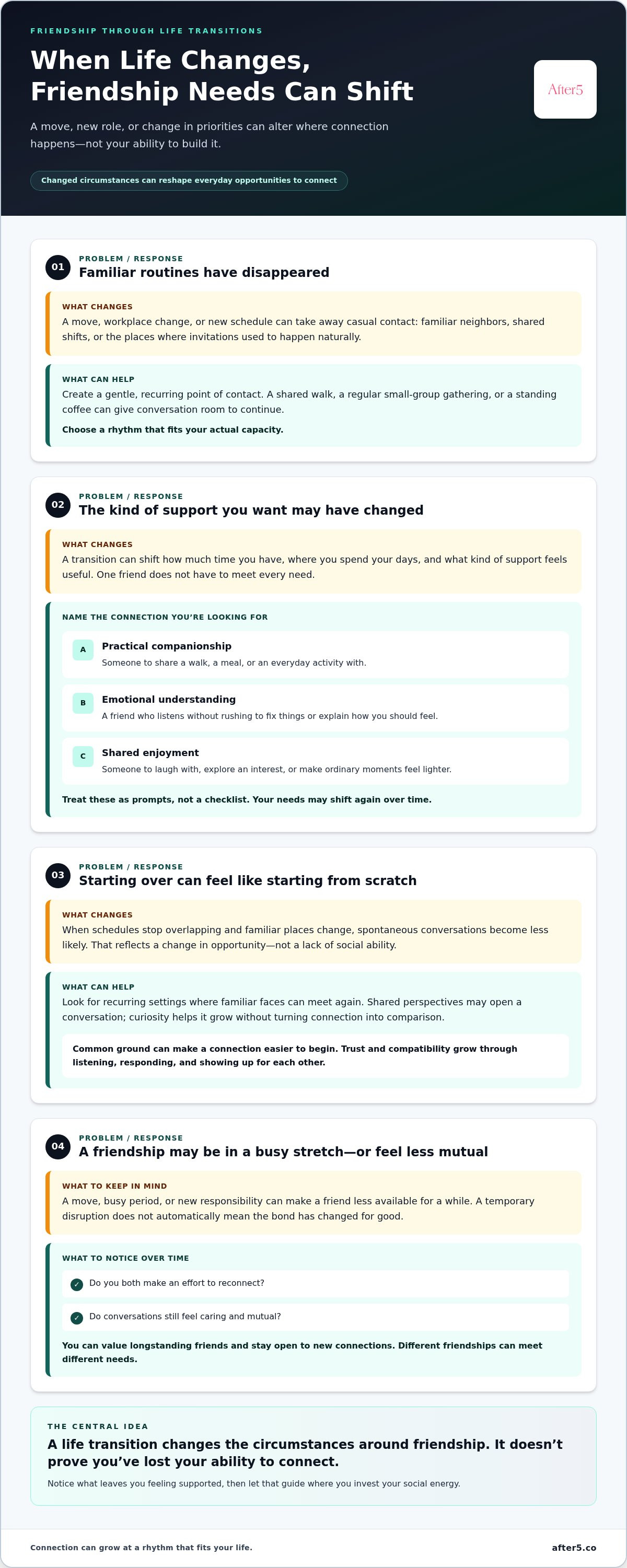
A move can leave your favorite coffee spot, familiar neighbors, and casual invitations behind. A new role may change your hours or the people you see each day. Even when a change is welcome, social routines can take time to catch up. That shift can feel lonely, but it doesn’t mean you’ve lost your ability to connect.
A life transition changes the circumstances around friendship; it doesn’t prove a personal inability to make friends. Friendship for women in new life chapter can mean bonds that adapt to new schedules, surroundings, and support needs. It can also mean making room for new connections while continuing to value the people who have known you through earlier seasons.
Connection between women can offer understanding and solidarity, especially when life feels in motion. The idea of Female Bonding describes social bonds that can provide emotional support. Wanting that support in a new form isn’t a rejection of old friends or evidence that you’re failing socially. It’s a natural response to changing circumstances.
What counts as a new life chapter?
A new chapter might begin with relocating, becoming a mother, going through a divorce, changing careers, or realizing your priorities have shifted. The change doesn’t have to be dramatic or planned. Sometimes it’s quieter: a once-busy social calendar no longer fits, or a familiar weekly routine disappears. Each transition has its own details. Here, the focus is on how changed schedules and surroundings shape everyday opportunities to connect.
Why familiar friendship routines may no longer fit
Many friendships grow through repeated, ordinary contact. You catch up after a shared shift, chat with a neighbor on a walk, or make plans because your schedules naturally overlap. When a workplace, neighborhood, or daily routine changes, those easy points of contact can fade without anyone doing anything wrong. The friendship may still matter; it may simply need a more deliberate rhythm than before.
Give that adjustment some space. A busy stretch, a move, or new responsibilities can make a friend less available for a while. A temporary disruption isn’t automatically a sign that the bond has changed for good. Notice what happens over time: do you both make an effort to reconnect, and do conversations still feel caring and mutual? Those patterns can help you distinguish a busy season from a relationship that no longer feels reciprocal.
Both things can be true: you can cherish longstanding friends and want fresh connection. Different friendships can meet different needs, and no one person has to fit every part of your life. Keep reaching toward the people who matter while staying open to women whose current experiences and perspectives feel aligned with yours.
How Life Transitions Reshape Women’s Friendship Needs
A change in circumstances can shift more than your calendar. It can affect how much time you have, where you spend your days, what matters most, and what kind of support feels useful. Friendship needs can shift as routines change, too. You may crave easy company, a thoughtful conversation, or more time with established friends. There’s no single right way to respond.
It can help to name the kind of connection you’re hoping for. Friendship for women in new life chapter doesn’t have to mean finding one person who meets every need. Consider three possibilities:
- Practical companionship: Someone to share a walk, a meal, or an everyday activity with.
- Emotional understanding: A friend who listens without rushing to fix things or explain how you should feel.
- Shared enjoyment: Someone to laugh with, explore a new interest, or make ordinary moments feel lighter.
You might want one kind of friendship now and another later. You might feel content with your current circle. A transition doesn’t automatically create a need for new friends, and it doesn’t dictate what connection should look like. Treat these categories as prompts, not a checklist. Notice what leaves you feeling supported, then let that guide where you invest your social energy.
The role of shared experience and understanding
Someone with a similar perspective may recognize the emotional texture of a change, even if her circumstances differ. A woman adjusting to a new workplace might understand the uncertainty of starting over, while your reasons and day-to-day reality remain your own. Common ground can open a conversation; curiosity keeps it from becoming a comparison. Similarity can make connection easier to begin, but trust and compatibility still grow through how you listen, respond, and show up for each other.
How changing routines affect opportunities to connect
Friendship has a practical side: people need chances to meet, talk, and become familiar. When schedules no longer overlap or regular places change, spontaneous conversation becomes less likely. That doesn’t say anything about your openness or social ability. It reflects a change in opportunity. Recurring settings can help bring familiar faces together again, giving conversation room to continue instead of starting from scratch each time.
Repeated contact doesn’t mean adding a packed social calendar. A regular small-group gathering, a shared walk, or a standing coffee can create a gentle point of connection. Choose a rhythm that suits your actual capacity. If you’d like a structured way to meet women with shared interests, perspectives, or life phases, explore After5 membership. Its Circles and monthly Gatherings offer recurring opportunities to connect.
Is It Disloyal to Want New Friends When Your Life Changes?
No. Wanting new friends doesn’t cancel your care for the people already in your life. A wider circle isn’t a ranking system, and one friend doesn’t need to meet every need. As your routines or priorities shift, new connections can bring fresh perspective while longstanding friendships remain meaningful.
Friendships can change in different ways. Some adapt through honest conversations and new ways of staying close. Others become less frequent because time, distance, or responsibilities get in the way. Sometimes effort begins to feel one-sided. None of these patterns alone proves that a friendship has failed. Look at what’s happening over time, not just during one busy week.
Can old friendships and new connections coexist?
They can. One friend might know your history; another might understand a change you’re working through now. Neither bond needs to replace the other. Realistic expectations help, especially if schedules or locations no longer line up as easily as they once did. A quieter rhythm can still hold affection, even if spontaneous calls or regular plans aren’t practical right now.
If you miss someone, try a warm, specific check-in: “I’ve been thinking about you. Would you like to catch up soon?” It opens a door without demanding that everything return to its old pattern. Then listen, share what you’ve been missing, and see what kind of contact feels workable for both of you.
When a friendship feels out of step
Pause before drawing a final conclusion. Ask yourself whether the distance seems temporary, tied to a particular circumstance, or persistent across different moments. Notice how you feel after you connect: heard and at ease, or consistently dismissed and drained? Those feelings can offer useful clues, but they aren’t a diagnosis or a verdict. Your friend may be navigating her own pressures, too.
Reciprocity doesn’t require perfectly equal effort every time. It can look like both people showing interest, making room for honest communication, and finding ways to reconnect, even if one takes the lead more often during a busy stretch. If something feels uncomfortable, you might name it gently: “I miss feeling close and wonder how we could make more space to catch up.” A direct conversation may help, but it doesn’t have to become a test the other person must pass.
Give yourself permission to build new connection at a pace that feels right. If recurring opportunities to meet women with shared perspectives would help, explore After5 membership. Friendship for women in new life chapter can expand your circle without asking you to erase your history.
How to Make Space for Friendship During a Life Transition
Making room for friendship doesn’t require a complete social reset. Start with one small intention, then let the next step grow from what feels comfortable. This flexible sequence can help turn “I’d like to meet people” into an easy, repeatable rhythm:
- Name what you need now. Are you hoping for a thoughtful one-to-one conversation, the warmth of a small group, or an ongoing community? Be honest about your energy and capacity, too.
- Choose a comfortable setting. Pick a place or activity where you can relax enough to be yourself. A quiet café, a walk, or a small-group gathering may feel easier than a large, unstructured occasion.
- Give it another chance. Familiarity often grows through seeing people more than once. Return to a setting that felt welcoming instead of deciding after a single meeting whether you’ve found your people.
- Follow up simply. If you enjoyed talking with someone, suggest continuing the conversation over coffee or at another gathering. Keep the invitation warm and low-pressure.
Think in small repetitions, not dramatic resolutions: one conversation, one return visit, one thoughtful message. That’s a more sustainable starting point than filling your calendar or forcing yourself to be more outgoing than you feel. Friendship for women in new life chapter can take shape at a pace that respects the rest of your life.
Choose the kind of connection you want now
Imagine what would make time together feel worthwhile. Do you want space for a one-to-one conversation, the ease of a small group, or a regular community where familiar faces can become part of your week? Consider which shared perspectives or values might help you feel understood. Your answer doesn’t need to be fixed. Preferences can shift as your circumstances do, so treat them as guidance, not a permanent label.
In Amsterdam, look for recurring local opportunities that fit your routine and feel comfortable to attend. A manageable location and a format you’d genuinely enjoy can make it easier to show up again. The aim isn’t to pursue every possibility. It’s to find a setting you can return to without turning connection into another obligation.
Turn a first meeting into a possibility
A good first conversation doesn’t need a perfect ending. If you felt mutual curiosity, send a short note: “I enjoyed talking with you. Would you like to meet again?” A specific, simple invitation gives both of you room to say yes or suggest another time. Notice whether interest and effort flow both ways, while remembering that a delayed reply can have many explanations. For more age-specific ideas, explore making friends in your 30s.
If recurring, thoughtfully structured introductions and gatherings would make starting feel easier, explore a thoughtful way to meet women in a similar chapter.
Finding Friendship for Your Next Chapter With After5
Once you have a clearer sense of what kind of connection would feel good, you can choose how to make room for it. Some women prefer to begin with one introduction. Others feel more at ease meeting familiar faces in a group over time. After5 brings together women around shared life phases, interests, and perspectives through several ways to connect. Each offers an opportunity to start a conversation, while the relationship itself develops through mutual interest and time.
For friendship for women in new life chapter, a thoughtful structure can help when old routines no longer bring new people into your orbit. Choose the format that feels most natural, then let conversation and mutual interest guide what comes next.
Different ways to begin connecting
After5 offers distinct starting points designed to make meeting women more intentional:
- Alike: Personalized introductions shaped by compatibility and shared interests. It offers a direct way to begin a conversation with someone whose perspective or interests may resonate with yours.
- Circles: Curated micro-communities centered on life phases, lifestyles, and shared perspectives. A Circle gives conversation a natural starting point while leaving space for members’ individual stories.
- Gatherings: Monthly small-group opportunities to meet face to face. A comfortable group format creates room to settle into conversation and get to know people over time.
These options aren’t a test of how outgoing you are. They offer different social settings, so you can consider whether an introduction, a shared community, or a small-group gathering fits your comfort and capacity. Shared context can help people find common ground, while genuine connection still develops through listening, openness, and time.
Let your next chapter unfold at your own pace
There’s no need to expect instant closeness. Meaningful connection can begin with one easy exchange: a relaxed conversation, a thoughtful question, or the realization that you’d like to meet again. Pay attention to what feels reciprocal. Take the next step when you’re ready, and let trust build gradually rather than asking a first meeting to answer every question.
Women’s communities can take many forms, shaped by how people listen, share, and make room for one another. For a deeper look at how women create meaningful belonging, explore finding a female circle. A new chapter doesn’t need a dramatic social overhaul. It can start with a setting that feels welcoming and one conversation worth continuing.
Discover After5 Membership and explore a thoughtful way to meet women in a similar season of life.
Make Room for the Connections Ahead
You don’t need to have your next chapter mapped out before you let someone new into it. Start with one small opening: a conversation, an introduction, or a plan to meet again. The right friendship for women in new life chapter can grow at a pace that feels natural, alongside the life you’re already building.
If a little structure would make that first step easier, After5 offers personalized Alike introductions, curated Circles for women with shared perspectives, and coordinated monthly small-group Gatherings. Each creates space to meet and see what connection might become, without asking you to force a friendship.
Explore After5 Membership and take a gentle step toward the conversations and connections waiting in your next chapter.
Frequently Asked Questions
Is it normal to want new friends after a major life change?
Yes. Searching for friendship for women in new life chapter can reflect a desire for company that understands your present-day perspective, not a lack of care for longtime friends. For example, you might still call a close friend from your old city while hoping to meet someone nearby who knows what starting over feels like. You can value the history you share and stay open to new conversations at the same time.
Can a life transition change what I need from friendship?
Yes. Your needs may shift with your energy, responsibilities, or sense of what you want to share. During a demanding stretch, you might appreciate a friend who can make flexible plans; later, you may want longer conversations or more spontaneous time together. Notice what you look forward to and what feels draining after social plans. Those observations can help you choose connections that suit your life now, without turning preferences into rules.
How long does it take to make a close friend in a new chapter?
There’s no universal timeline for becoming close. A first meeting may feel promising, while trust still takes shape through ordinary moments, such as remembering something the other person shared or following through on a plan. Rather than measuring progress by a deadline, look for comfort, genuine interest, and room to be yourself. If closeness is developing, you’ll often find more to talk about and reasons to reconnect naturally.
Can I make friends in Amsterdam if I am new to the city?
Yes. In Amsterdam, look for recurring, in-person opportunities that fit your routine, whether that means a small gathering or a community where you can see familiar faces again. After5 connects women through curated Circles, personalized introductions, and monthly small-group Gatherings. Choose an option that feels manageable, then give yourself time to settle into the city and discover which conversations you’d like to continue.
What if I feel too busy to make new friends?
You can make space for connection without adding a full social calendar. Try one manageable plan, such as a short coffee near somewhere you already go or a small-group gathering that fits your schedule. Be clear with yourself and others about the time you can offer. A brief, thoughtful check-in can also keep a promising conversation alive until you have room to meet again.
Should I tell a new friend that I am going through a life change?
Only if and when it feels comfortable. You could share a simple detail, such as “I’ve recently moved, so I’m still finding my rhythm,” without explaining the whole story. That can help someone understand why your schedule is changing or what you’re hoping to find in the city. Let trust guide how much you share. Listening to each other and honoring privacy can make openness feel more natural over time.