


What if the first step toward a new social circle isn’t a big night out, but one small invitation you’re willing to repeat? Learning how to make friends after divorce can feel vulnerable when familiar routines have changed and mutual friendships have shifted. You don’t have to rebuild your whole social life at once.
It makes sense if reaching out feels harder than it used to. Parenting, work, and a changing sense of who you are can leave little room for spontaneous plans. New closeness rarely arrives on schedule, either. Friendship often starts with a simple conversation, a shared interest, or seeing the same people again.
This guide offers practical, low-pressure ways to meet women whose interests and rhythms fit your life, reconnect with people you miss, and make invitations feel more manageable. You’ll find ideas for creating a sustainable social routine, even with a full calendar, and ways to recognize which settings feel comfortable. No instant best friends required. Just a few thoughtful steps, taken at your own pace.
Key Takeaways
- Understand why separation can reshape your friendships and sense of belonging, without treating that change as a personal failure.
- Learn how to make friends after divorce with a simple sequence: decide what kind of connection you want, choose a setting, and follow up gently.
- Compare reconnecting with existing friends, recurring activities, and curated small groups to find a social format that suits you.
- Build a rhythm that respects parenting, work, recovery, and downtime, and meet a declined invitation with perspective rather than self-judgment.
- Explore how After5’s Circles and personalized introductions can offer another path to intentional, in-person connection with women in similar life chapters.
Why Making Friends After Divorce Can Feel So Different
Divorce can change more than your relationship status. Shared routines may disappear, invitations once planned as a couple can feel different, and mutual friendships may shift as people adjust. You might feel grief, relief, uncertainty, or several things at once. There’s no single right response, and no timetable you need to follow.
That’s why learning how to make friends after divorce isn’t about replacing your ex-partner or rebuilding your old social circle exactly as it was. It’s about making room for supportive connection in a way that fits the person and life you have now. Social connection is widely understood as a core human need for social connection, not a sign that you should already feel fine or have everything figured out.
A changed social life doesn’t mean friendship is out of reach; it means connection may take a new shape. You can keep the friendships that still feel meaningful while gradually creating space for people who fit this chapter.
What can change in your social life after divorce?
Some friendships may have grown around couple-based routines: dinners with partners, family outings, or plans organized through your former spouse. After separation, those patterns can become less natural. A mutual friend might pull back, feel unsure how to include you, or remain a steady source of support. Your experience is your own; there’s no rule that every shared friendship must end.
It’s also possible to miss parts of your former social life while appreciating the freedom to shape new routines. Let both be true. Reach out to friends you value, and notice which connections feel reciprocal and comfortable. New friendships don’t erase old ones. They can sit alongside them, adding fresh perspective and companionship over time.
Is it too soon to make new friends?
There’s no universal post-divorce schedule for meeting people. Instead of asking whether enough time has passed, notice how a small invitation feels. Are you curious about talking with someone new? Could you make room for a coffee or a short walk without feeling pressured to perform or explain everything?
If the idea feels appealing, try a manageable step. If it feels like too much, give yourself space and return to it later. You’re not behind. Start with a pace that respects your energy, responsibilities, and need for quiet. Friendship can begin with a light conversation, not a promise of instant closeness.
How to Build New Friendships After Divorce, One Step at a Time
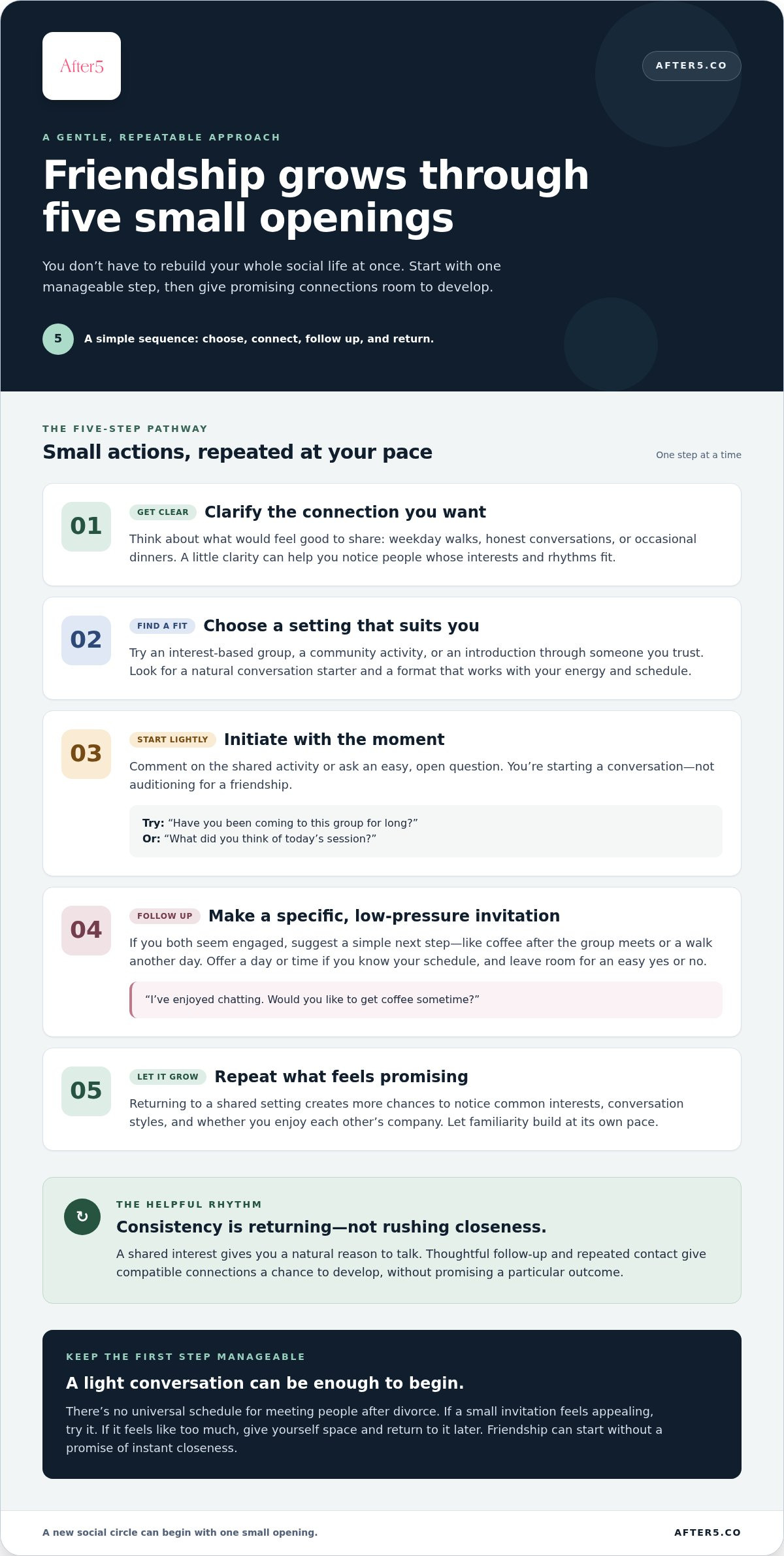
A steady approach makes connection feel more natural than trying to create an instant best friend. Think of friendship as a series of small openings: choose where to meet people, begin a conversation, and give promising connections room to grow. If you’re wondering how to make friends after divorce, start with steps you can repeat without overloading your schedule.
- Clarify the connection you want. Are you hoping for a friend to share weekday walks, honest conversations, or occasional dinners? You don’t need a perfect checklist. A little clarity helps you recognize people whose interests and rhythms feel like a fit.
- Choose a setting that suits you. Consider interest-based groups, community activities, or an introduction through a trusted friend. Pick a place where conversation has a natural starting point, and where the format feels comfortable for your energy and schedule.
- Initiate lightly. Make a comment about the shared activity or ask an easy, open question. You’re starting a conversation, not auditioning for a friendship.
- Follow up with a specific invitation. If you both seem engaged, suggest a simple next step, such as getting coffee after the group meets or taking a walk another day. Offer a day or time if you know your schedule, and keep the invitation easy to accept or decline.
- Repeat what feels promising. Returning to a shared setting gives you more chances to notice common interests, conversation styles, and whether you enjoy each other’s company. Let familiarity build at its own pace.
Where can you meet potential friends after divorce?
Look for places that bring people together around a shared interest or a regular community activity. A class, local group, or gathering hosted by someone you trust can give you a natural reason to talk. In Amsterdam, explore women’s communities and in-person groups, then choose a format that fits your day-to-day life. Smaller groups may suit you if one-on-one conversation feels easier; an activity with a shared focus can help when you’d rather not carry the whole conversation.
How do you turn a first conversation into a connection?
Keep the opener rooted in the moment: “Have you been coming to this group for long?” or “What did you think of today’s session?” There’s no need to lead with personal questions about divorce. If the conversation flows, try: “I’ve enjoyed chatting. Would you like to get coffee sometime?” Then leave room for the other person to respond freely.
Consistency is returning to shared spaces and following up thoughtfully, without rushing closeness. It’s not a promise of a particular outcome. It’s a way to give compatible connections the chance to develop through ordinary, repeated contact.
If you’d value a more guided route to meeting women in similar life chapters, explore After5 Membership, with curated Circles, personalized introductions, and coordinated monthly small-group gatherings.
Which Friendship-Building Approach Fits Your Life Right Now?
There isn’t one right route. You might reconnect with someone familiar, become a regular in a shared-interest setting, or try a curated small group. Each offers a different starting point. Shared context can ease the awkwardness of meeting someone new because there’s already something natural to talk about. To choose, consider how much structure you want, whether you prefer a group or a one-to-one conversation, and how easily you can return to the setting.
| Approach | Structure | Repetition | Effort | May suit you if… |
|---|---|---|---|---|
| Reconnect with existing friends | Informal and familiar | Depends on both of you | One warm message to start | You miss a particular person or valued bond |
| Recurring activities | Shared interest or community setting | Built in when you return | Show up and join in | You like familiar faces and conversation with a natural focus |
| Curated small groups | Intentionally brought together | Can create opportunities to meet again | Arrive open to conversation | You prefer a more guided setting with people in similar life chapters |
Should you reconnect with old friends or start fresh?
Reaching out to an old friend can restore a bond that still matters, especially when you’re both open to reconnecting. For those looking for support in healing and mending fractured personal ties, relationship guidance resources like enkizuna.com focus on reconnecting drifted bonds. Some friendships may feel different now, and you’re allowed to choose which ones feel supportive. You don’t owe anyone a full account of your divorce just to say hello. Try: “I was thinking of you and would love to catch up sometime. Are you free for coffee soon?”
Are recurring groups or one-to-one introductions a better fit?
A recurring group gives conversation a shared focus and lets familiarity build naturally as you see the same people again. A one-to-one introduction offers more space for a direct conversation, which can feel easier if groups are tiring. After5’s Circles bring women together around shared life phases, lifestyles, and perspectives, while Alike offers personalized friendship introductions based on shared interests and compatibility. These formats provide a starting point, while closeness develops between people over time.
To decide how to make friends after divorce in a way that fits your life, consider what feels easiest to begin with: familiar faces, a smaller setting, or a direct introduction. You can combine approaches, pause, or change course as your needs shift. Choose the next step that feels possible, not the one you think you’re supposed to take.
How to Make Friendship Feel Manageable During a Major Life Change
A new social life should support the life you have, not become another demanding project. Work, parenting, recovery, and quiet time all need room. Choose one manageable recurring opportunity, such as a group that fits a day you’re often free, rather than filling every open evening. Before committing, consider the time, travel, and energy the plan requires. A steady rhythm can be as simple as protecting one regular window for connection.
How can you make social plans without overcommitting?
Build plans around routines that already exist. If you have a predictable evening free, consider meeting someone then; if parenting schedules shift, be upfront about the days or times that usually work. Suggest a specific, low-pressure plan that fits your calendar, and be clear if you can only stay for a short time. A clear, honest invitation sets expectations without requiring a long explanation.
And if you need to reschedule or take a break, do so kindly. “I can’t make it this week, but I’d love to find another time” keeps the door open when you genuinely want to reconnect. Sustainable friendship leaves space for real life. It doesn’t require you to be available every time.
What if the first few attempts feel awkward or disappointing?
One conversation can’t tell you whether a friendship will develop. Instead of grading the interaction as a success or failure, ask yourself: Did I feel comfortable enough to be myself? Was there mutual curiosity? Would I be open to talking again? A quiet or uneven first meeting may simply mean you were both finding your footing.
If a particular group or format consistently feels draining, try a different setting. You might prefer a smaller gathering, a familiar shared activity, or a more direct conversation. You’re looking for a fit, not proof that you can connect with everyone.
Keep personal boundaries, too. You can share as much or as little about your divorce as feels right. A simple “I’m figuring out a new chapter and focusing on meeting people” is enough. Trust can grow gradually; you don’t need to tell your whole story to earn a place in a conversation.
A more structured setting can make it easier to create room for connection without building every plan from scratch. After5 brings women together through curated Circles, personalized introductions, and coordinated monthly small-group gatherings. It’s one option for making in-person connection part of your routine, with no need to rush closeness. Explore After5 Membership if that kind of structure feels right for you.
A Thoughtful Next Step for Finding Friendship After Divorce
There’s no single route to a fuller social life. You might message an old friend, return to a shared-interest group, or accept an introduction. Choose a format that fits your energy and schedule, then give it room to unfold. Show up again when you can. Follow up if a conversation felt mutual. Small actions create space for connection without demanding instant closeness.
If you’re still considering how to make friends after divorce, ask yourself two questions: What kind of companionship would feel good in this chapter? What pace feels realistic right now? Your answers can guide a first step, whether that’s a warm note to someone you miss or setting aside time for a recurring opportunity to meet people.
How can curated connection support a fresh start?
Shared life phases and interests can give a first conversation an easy starting point. After5 is a friendship platform for women, with curated Circles organized around shared life phases, lifestyles, and perspectives. Its Alike offering provides personalized friendship introductions based on shared interests and compatibility. Membership also includes coordinated monthly small-group gatherings, creating opportunities to meet in person. These formats offer common ground for an introduction, while friendship develops naturally between people.
A structured option isn’t essential for everyone. It may appeal if you’d rather not create every opportunity from scratch or would enjoy meeting women whose perspectives and current chapters feel relevant to yours. No format can promise a particular connection, and you’re free to choose what feels right for you.
What is one low-pressure step you can take today?
Pick one manageable action: send a simple message, look for a recurring group that fits your routine, or decide you’d like a smaller, more guided setting. You don’t need to solve your whole social life this week. Just make the next opportunity for conversation a little easier to reach.
If curated, face-to-face connection sounds like a good fit, explore After5 Membership and see whether its approach feels right for this chapter. Take your time. The next meaningful connection can begin with one thoughtful step.
Make Space for the Connections Ahead
Learning how to make friends after divorce doesn’t require a perfect plan or an instant inner circle. Start with what feels manageable: reconnect with someone you value, return to a shared setting, and follow up when a conversation feels mutual. Let friendship take shape through small, repeated moments, at a pace that respects the rest of your life.
If you’d like a more guided way to meet women in a similar chapter, After5 offers curated Circles shaped around shared life phases, lifestyles, and perspectives. Personalized introductions and coordinated monthly small-group gatherings create opportunities for in-person connection, while friendships develop between the people who meet.
Choose the approach that feels right for you now. To meet women through curated Circles, personalized introductions, and monthly gatherings, explore After5 Membership.
Frequently Asked Questions
How do you make friends after divorce?
Start by choosing the kind of connection you’d welcome, then create one manageable opportunity to meet people. Reconnect with someone you trust, return to a shared-interest group, or accept an introduction. If a conversation feels mutual, suggest a simple follow-up. Learning how to make friends after divorce is less about finding an instant best friend and more about making space for connection to grow at a pace that suits you.
Is it normal to feel lonely after divorce?
Yes, feeling lonely after divorce can be a natural response to a major change in routines, relationships, and your sense of belonging. You may miss having someone to share everyday moments with, even if the separation was right for you. Try reaching out to someone safe or choosing a low-pressure social activity. If loneliness feels persistent or overwhelming, consider talking with a trusted support person or a qualified mental health professional.
How soon after divorce should I start dating or making new friends?
There’s no universal timeline, and dating and friendship don’t have to begin at the same time. You might feel ready to meet a new friend before you want to date, or prefer quiet space for now. Notice whether you feel curious about conversation and able to make a small plan without forcing yourself. Let your capacity, responsibilities, and comfort guide the pace rather than pressure from other people.
Where can I meet new friends after divorce?
Try settings with a natural shared focus, such as a community activity, an interest-based group, or an introduction through someone you trust. In Amsterdam, explore local women’s communities and in-person groups that fit your schedule and preferred social style. After5 offers curated Circles, personalized friendship introductions, and coordinated monthly small-group gatherings for women seeking face-to-face connection. These options create opportunities to meet, while friendship develops between people over time.
Can you stay friends with mutual friends after a divorce?
Yes, it’s possible to stay close to mutual friends after divorce, though relationships may shift as everyone adjusts. You can let friends know you value them and would like to keep spending time together, without asking them to take sides. Some may remain part of your life, while others may become less present. Pay attention to whether the friendship feels respectful and supportive, and give yourself permission to set boundaries if it doesn’t.
What should I do if making friends after divorce feels awkward?
Make the first step smaller. Ask about the shared activity, offer a simple compliment, or introduce yourself to one person rather than trying to work the whole room. Awkwardness doesn’t mean you’re bad at connecting; it can simply take time to feel comfortable in a new setting. Afterward, consider whether you felt some ease or mutual curiosity. If not, try a different group or a quieter format.
How do I make meaningful friends after divorce when I have children?
Choose connection that works with your actual parenting routine. A daytime community activity, a conversation with another parent, or a recurring plan during a reliable window may be more realistic than late or spontaneous outings. Be clear about your availability, and suggest a simple alternative if plans need to change. Meaningful friendship doesn’t require constant time together. Small, thoughtful check-ins and plans that respect both schedules can help a bond grow.