


Shared interests can make connection feel more natural, rather than like another task to get right. Learning how to stop feeling isolated as a woman can begin with small steps: acknowledge the feeling, reach out to someone you trust, and spend time in places where conversation has a shared starting point. You don’t need to transform your social life all at once.
Feeling lonely can be difficult, especially when you’re surrounded by people or moving through a new chapter. It doesn’t mean you’re failing at friendship or that meaningful connection is out of reach. Make room for the feeling while choosing one gentle step toward the kind of company you want.
Explore how beliefs about trust can shape connection, how community can help you feel more rooted, and why shared interests offer an easy way to meet women with something in common. The goal isn’t to fill every quiet moment. It’s to build relationships that feel thoughtful, mutual, and right for you.
Key Takeaways
- Notice what may be feeding loneliness, and meet the feeling with self-compassion rather than self-judgment.
- Question assumptions about trust gently; opening up to someone you feel safe with can make connection feel more possible.
- Look for community that fits your current life chapter, and make space for new connections if your existing circle isn’t meeting your needs.
- Use shared interests as an easy starting point for conversation and a natural way to meet like-minded women.
- Choose small steps that feel genuine, from reaching out to someone you value to spending time in settings where you feel comfortable.
1. Common causes and emotions associated with loneliness
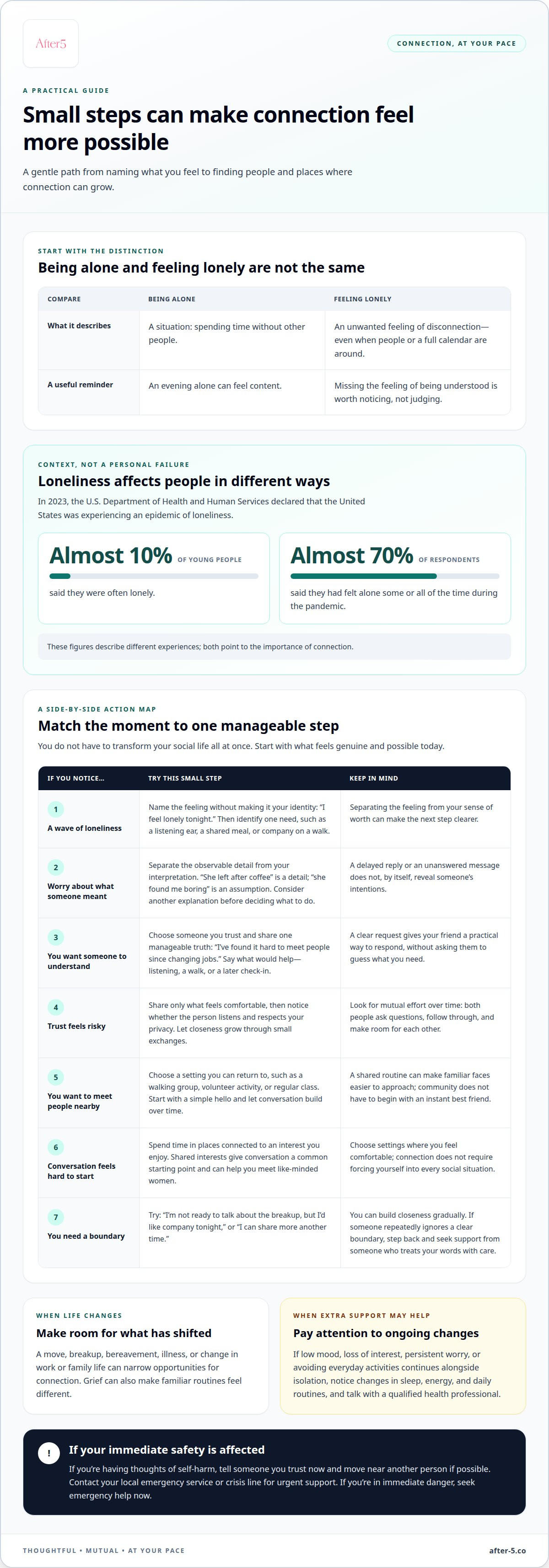
Loneliness can follow a move, breakup, bereavement, illness, or change in work or family life. You may have colleagues, relatives, and a full calendar, yet miss feeling understood. Or you may spend an evening alone and feel content. The difference matters: being alone describes a situation; loneliness describes an unwanted feeling of disconnection.
Life demands can also leave little room for relationships. One Mayo Clinic Connect commenter described working 50-60 or more hours per week while managing home, parenting, and pets. After a loss, even familiar routines can feel different. A recent widow on the same community page described days when she didn’t want to do anything. These examples show how workload, grief, health, and life transitions can narrow opportunities for connection.
Loneliness can bring sadness, shame, numbness, or the thought that something is wrong with you. Name the experience without turning it into an identity: “I feel lonely tonight” is more compassionate than “I’m always alone.” Then identify one specific need, such as a listening ear, a shared meal, or company on a walk. This helps separate the feeling from your sense of worth.
Loneliness is also a widespread concern, not a personal failure. In 2023, the U.S. Department of Health and Human Services declared that the United States was experiencing an epidemic of loneliness. Almost 10% of young people said they were often lonely, while almost 70% said they had felt alone some or all of the time during the pandemic. Those figures describe different experiences, but both point to the importance of connection.
If low mood, loss of interest, persistent worry, or avoiding everyday activities continues alongside isolation, these can be signs of depression or anxiety. Notice changes in your sleep, energy, and ability to manage daily routines, then talk with a qualified health professional about what you’re experiencing.
If isolation is affecting your immediate safety or you’re having thoughts of self-harm, tell someone you trust now and move near another person if possible. Contact your local emergency service or crisis line for urgent support. If you’re in immediate danger, seek emergency help now.
Choosing connection doesn’t mean forcing yourself into every social setting or dismissing grief. It means allowing the feeling to be present while taking one manageable action, such as messaging a trusted friend or arranging a regular call. For women learning how to stop feeling isolated, this practical step toward another person can begin to rebuild a sense of belonging.
Beliefs about trust and other people's intentions
After a difficult friendship or painful life change, new connection can feel risky. You might assume a delayed reply means rejection or wonder whether someone’s kindness comes with expectations. Those thoughts can protect you from disappointment, but they can also make neutral moments feel like proof that nobody wants you around. Pause and separate what happened from what you fear it means. A friend who hasn’t replied may simply be busy; one unanswered message doesn’t reveal their intentions.
Try a small reality check before withdrawing. Write down the observable detail, then your interpretation. For example: “She left after coffee” is a detail; “she found me boring” is an assumption. Consider another explanation, such as an early start the next morning. This isn’t about persuading yourself that everyone is trustworthy. It’s about considering more than one explanation before deciding what to do next.
Opening up to someone you trust can help you put an experience into words and feel less alone. Start with a specific, manageable truth: “I’ve found it hard to meet people since changing jobs.” You can add what would help, such as listening, a walk, or a later check-in. Clear requests give your friend a practical way to respond, without asking them to guess what you need.
Trust can grow through small exchanges rather than one dramatic disclosure. Share something personal that feels comfortable, then notice how the other person responds. Do they listen without turning your story into gossip? Do they respect your choice to keep some details private? These moments offer useful information. You’re allowed to build closeness gradually, and you don’t owe anyone immediate access to your private life.
Boundaries can make opening up feel more manageable. You might say, “I’m not ready to talk about the breakup, but I’d like company tonight,” or, “I can share more another time.” A considerate person can hear a limit without pressuring you to change it. If someone repeatedly dismisses your feelings or ignores a clear boundary, step back and seek support from someone who treats your words with care.
For a practical next step, choose one person and one honest sentence. Send a message, suggest a brief call, or ask whether they have space to listen. When you meet someone new, look for mutual effort over time: both people ask questions, follow through, and make room for each other. These patterns can help you feel safer exploring connection, without requiring instant certainty about another person.
3. Finding new connections and community
Community often begins with a shared routine, not an instant best friend. After moving to a new city, choose one setting you can return to, such as a walking group, volunteer activity, or regular class. Familiar faces make it easier to start with a simple hello and build conversation over time. If your current circle no longer feels supportive, seeking new connections can open space for belonging.
No-cost ways to meet people include inviting an acquaintance for a walk, joining a public online community, or volunteering for an activity you enjoy. Choose an option that fits your schedule, then make one clear invitation: “Would you like to walk together this weekend?” A specific plan gives connection a practical starting point without requiring a big social commitment. If you’re wondering how to stop feeling isolated as a woman, choose a first step that feels possible today.
Online communities and video support groups can help you connect when travel or leaving home feels difficult. Start with a group focused on a shared experience or life change, then participate at your own pace. You might respond to a discussion or attend a video meeting before sharing personal details. Online contact can offer a bridge to connection when in-person plans feel out of reach.
Therapy and support groups offer different kinds of support. A therapist can help you explore loneliness alongside concerns such as anxiety, while a grief group can connect you with people who understand bereavement. A Mayo Clinic Connect commenter said attending a grief group helped her be with others who had lost someone dear. Costs depend on the provider, format, and insurance coverage, so therapy and group support may have different costs.
Adult friendship grows through small, repeated acts. After a move, introduce yourself to someone at a recurring class, ask a neighbor about a local activity, or follow up with someone you enjoyed meeting. Keep the first invitation light: coffee, a shared walk, or joining the same activity again. A casual acquaintance can offer meaningful connection even before a close friendship forms.
Choose a setting where conversation has a natural starting point, then return if it feels comfortable. You don’t need to arrive with a friend or share your whole story at once. If one group doesn’t suit you, try another format or interest. Learning how to stop feeling isolated as a woman can mean giving yourself room to explore, notice what feels welcoming, and build community at your own pace.
4. Meeting people through shared interests
A shared interest gives a first conversation an easy place to begin. Instead of searching for the perfect introduction, talk about the activity in front of you: a book, recipe, trail, or creative project. Mayo Clinic Connect commenters suggest joining a group centered on a hobby or shared activity to meet people with similar interests. The activity gives you a natural reason to show up and a common topic to return to.
Start with something you already enjoy or want to explore. If you like reading, look for a book discussion group. If cooking feels more your style, try a community class or recipe exchange. Choose based on curiosity, not what seems most impressive. When an activity feels like yours, it’s easier to relax, take part, and discover whether you enjoy the people there too.
Think about the format as well as the hobby. A small discussion may suit you better than a large, fast-moving gathering. A hands-on class can make conversation feel less intense because everyone has a task. If you prefer movement, consider a walking group or beginner-friendly class. The right setting gives you a comfortable way to participate, even if you’re not ready to share much about yourself.
Keep your first visit simple. Before you go, choose one question to ask, such as, “How did you get interested in this?” During the activity, listen for a detail you can follow up on. You might say, “You mentioned a pottery class. What did you enjoy making?” Small exchanges can turn familiar faces into friends without forcing instant closeness.
Consistency helps turn an interest into a community. Return to the same group when you can, learn names, and notice who welcomes conversation. After a few meetings, suggest a low-pressure next step, such as getting coffee after class or sharing book recommendations. If the atmosphere feels uncomfortable or the interest no longer fits, try another activity. Finding a good fit can take experimentation, and one group doesn’t need to become your whole social world.
Friends and family may already share an interest you’ve overlooked. Ask someone to join you for a gallery visit, neighborhood walk, or new recipe at home. If they’re unavailable, go anyway and focus on the experience. You don’t need a companion to begin a hobby. Choose an activity that gives you something meaningful to do, then leave room for conversation to unfold naturally.
Shared interests don’t promise instant friendship. They offer a practical starting point: a reason to meet, a subject to talk about, and another chance to connect. Pick an activity that appeals to you, find a group or class, and give yourself permission to begin with a hello.
5. What are practical steps to feel less lonely and build connection?
Notice what loneliness sounds like in your self-talk. “Nobody wants me around” turns a painful moment into a sweeping verdict. Try a compassionate, specific response instead: “I feel disconnected tonight, and I can reach out to one person.” This won’t erase the feeling, but it gives you a kinder next step and keeps one quiet evening from defining your whole social life.
Choose an action without demanding that you feel cheerful first. Message a friend, invite a relative for a meal, or suggest a walk after work. Calling a friend regularly can create a dependable point of contact. If you have several friendships, prioritize the people who leave you feeling respected and at ease. A casual acquaintance can matter too; a friendly chat with a neighbor may bring warmth without becoming a close friendship.
Notice how you’re coping. Filling every quiet moment with screens or plans can keep you from recognizing what you need. Spending time with people who make you feel bad just to avoid being alone can leave you more disconnected. If a gathering feels unkind or draining, choose restorative solitude instead. Read, cook, or take a quiet walk, then decide on one connection-building step for another day.
Make that step concrete. You might volunteer for a cause you care about, join a community activity, or walk your dog at a familiar local spot. Caring for a pet can offer companionship, while regular walks create chances to greet other pet owners. If leaving home feels difficult, an online community or video support group can offer a place to participate and connect from home.
When loneliness returns, ask yourself what you value more in that moment: staying inside the feeling or creating connection with yourself and others. You don’t need to reject the feeling to act. Write down a past interest you’d like to revisit, then choose a manageable way to bring it into your week. Purpose can also come from caring for a living thing, making something, or remembering a time you felt loved and connected.
If anxiety about social situations is keeping you isolated, a mental health professional can help you explore it; cognitive behavioural therapy may help with that anxiety. For a lighter first step, choose one invitation or activity that feels manageable. Explore a thoughtful way to meet women and build connection.
After5
After5 is a friendship platform for women looking to make meaningful new connections. If you’d like a more intentional way to meet women in similar life chapters, After5 Membership brings together options including Circles, Gatherings, and Alike. The focus is shared values, personal interests, and the possibility of friendships that grow naturally over time. It can be a helpful next step if you’re ready to move beyond wanting connection and begin creating space for it in your life. Choose the kind of experience that feels comfortable for you, and take it at your own pace. If you’d like to explore whether After5 feels like a fit, contact After5.
Make room for the connections you want
There’s no single moment when a social life suddenly feels complete. It grows through choices that reflect who you are now: what you make time for, what conversations you welcome, and where you feel able to show up as yourself. Learning how to stop feeling isolated as a woman can mean treating connection as something you can shape, one thoughtful step at a time.
You don’t have to wait until loneliness disappears before beginning. Let your next step be modest and intentional. Reach out, accept an invitation that feels right, or make space for a new experience. Notice what leaves you feeling more open and connected, then build from there. Your social world can evolve alongside you without needing to look like anyone else’s.
If you’re ready to explore a more intentional path toward friendship, connect with After5. Let your next chapter begin with a little curiosity, a little courage, and room for people who feel like your kind of people.
Frequently Asked Questions
How can I manage loneliness?
Notice when loneliness tends to surface, then plan support around that moment. If evenings feel hardest after a busy day, decide beforehand whether you want quiet company, a short conversation, or restorative time alone. A simple note on your phone can help you spot patterns without judging them. Adjust your plan as your needs change, rather than expecting one routine to work every day.
So, what can you do?
Make a small connection menu for different energy levels. On a low-energy day, send a voice message or share a photo with someone you like. When you have more capacity, suggest coffee or join a familiar activity. Keep the options specific so choosing doesn’t become another burden. After trying one, notice how you feel and keep the actions that bring genuine ease.
Why do women feel isolated, and what factors can contribute?
Isolation can grow when daily life offers little time or opportunity for mutual connection. A demanding work schedule, caregiving responsibilities, a move, changing friendships, or a major loss can disrupt familiar routines. Sometimes social contact exists, but conversations don’t feel emotionally supportive. Consider what affects you most: time, access, life changes, or feeling misunderstood. That distinction can guide a more fitting next step.
How can women find supportive friendships and community groups nearby?
In Amsterdam, look for recurring activities tied to a neighborhood or interest, such as a reading group, walking meet-up, or volunteer project. Local community spaces and neighborhood noticeboards can help you discover options. Before choosing, consider whether the time, location, language, and format feel manageable. Try a gathering, then decide whether the people and pace suit you before committing further.
How can women cope with loneliness when working remotely or caring for children?
Build connection into routines that already exist. If you work remotely, arrange a brief informal check-in with a colleague or work from a shared space when practical. If you’re caring for children, chat with another caregiver during a playground visit or arrange a short walk. These small moments can fit around responsibilities. A message exchange can also help on days when meeting in person isn’t realistic.